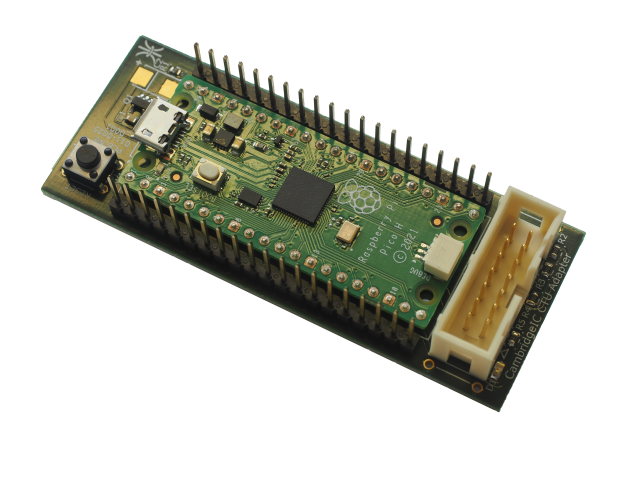
The Streaming Adapter has been replaced by the MultiComms Adapter, which supports more interface and powering options.
The Streaming Adapter is an SPI master and the CTU is an SPI slave. Unlike CambridgeIC’s CTU Adapter, the Streaming Adapter captures measurements over SPI at the maximum rate possible for each IC. It can efficiently stream results over USB, to make them available to software running on a connected PC. Please Register and log in to download CTU Streaming Demo Software from the link below.
The Streaming Adapter is available with USB Cable and SPI Cable PN 013-6002 for use with CTU Development Boards including the CAM312 Development Board. The part number is 013-7006.
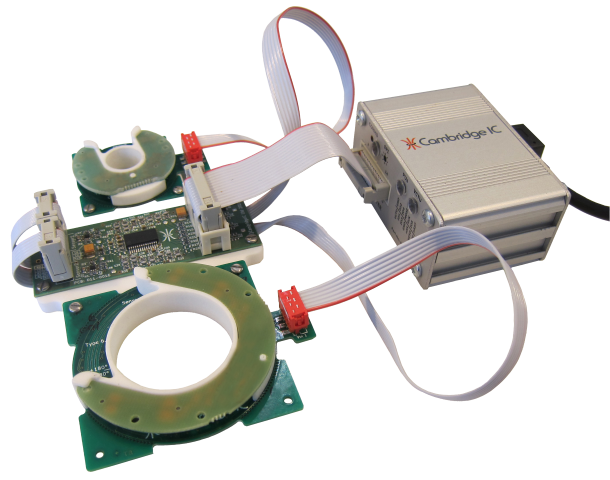
The Type 6 CAM204 Development Kit enables a user to quickly test and integrate the CAM204 CTU chip with two Type 6 Precision Through Hole sensors.
The kit includes:
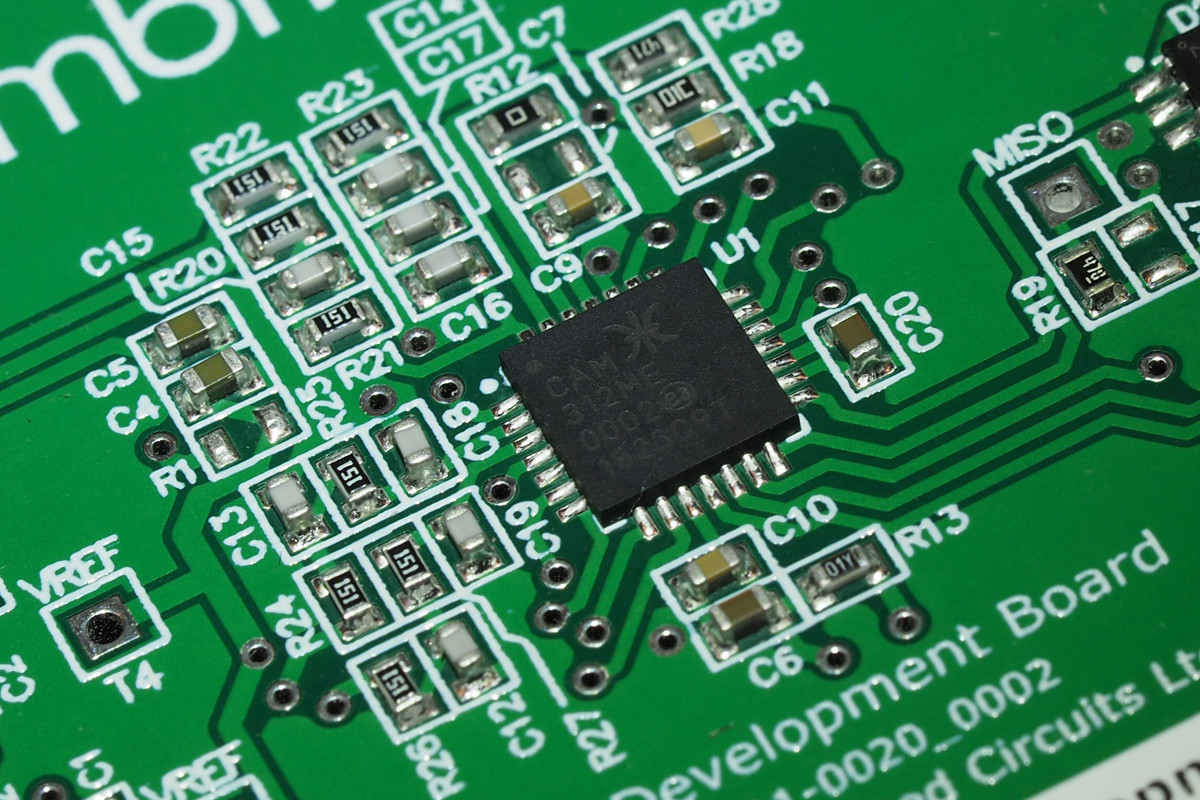
CAM312 Development Board includes a CAM312 chip and the external circuitry required for operating up to two Type 4 sensors, or one Type 2 or Type 6 sensor.
The CAM312 Development Board may be used to evaluate the CAM312 chip. Connect one or more sensors as required to the sensor connectors. A CTU Adapter may be connected to the CAM312 Development Board’s SPI interface, for USB connection to a PC running CambridgeIC CTU Software.
The CAM312 Development Board may be used for customer product development. Example host code is available for download from a link below. This is to assist with development of a customer’s embedded software. The code includes examples targeting a Raspberry Pi and Arduino Due. Please see how to connect a Raspberry Pi 4B to a CAM312 Development Board.
Find out more about how sensors are classified and what this means for CTU selection in our FAQ.
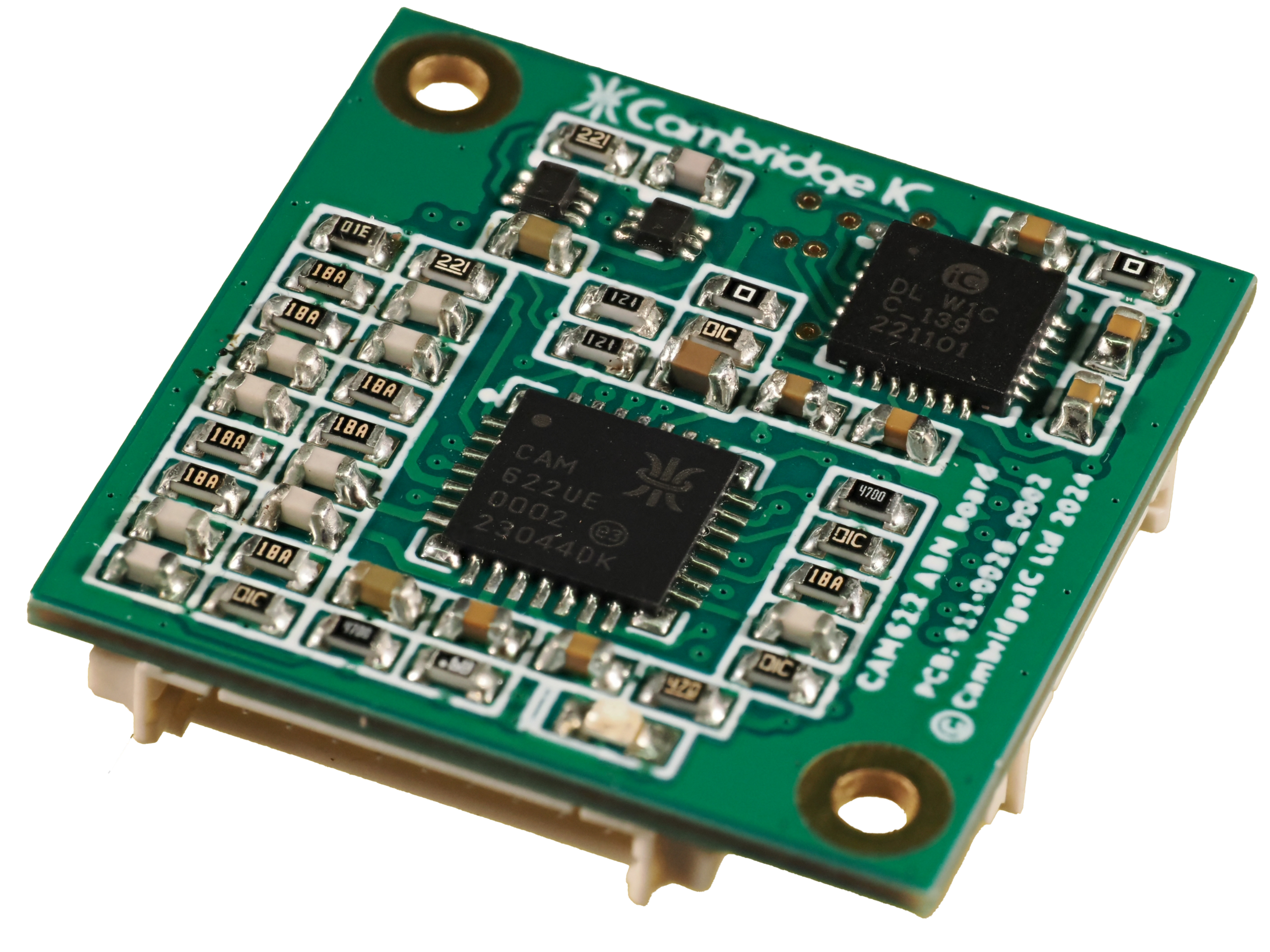
The CAM622 ABN Board has been replaced by the CAM622 MultiComms Board. This still supports quadrature ABN, and it adds new interface options.
The CAM622 ABN Board connects to a Type B Sensor. It generates encoder-like ABN digital quadrature signals in response to movement of a Type B Target above the sensor.
The CAM622 ABN Board includes the CAM622 IC itself, a step-down power supply for efficient operation from a 5V input and an iC-Haus iC-DL line driver IC for generating 5V level differential ABN signals and their inverses.
The CAM622 ABN Board connects to a Type B Rotary Sensor with the 6-way Dual PicoBlade Cable part 013-6019. Alternatively it connects to a Type B Linear Sensor with the 120mm 6-way PicoBlade-EZMate Cable part 013-6021.
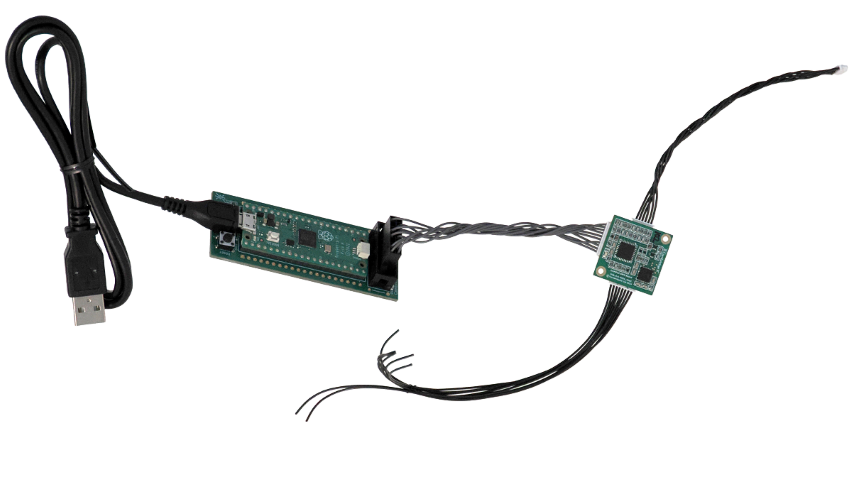
The CAM622 ABN Bundle has been replaced by the CAM622 MultiComms Bundle, supporting more interface options.
The CAM622 ABN Bundle is a kit of parts to help customers test and evaluate the CAM622. It connects to a customer’s choice of Type B Sensor to measure the rotation angle of an adjacent Type B Target.
At its core is the CAM622 resonant inductive encoder IC, on a CAM622 ABN Board. This board includes circuitry to power the 3.3V CAM622 from a 5V supply input, and an iC-Haus iC-DL line driver IC generating 5V level differential ABN outputs. The bundle includes a PicoBlade ABN Cable to allow a customer to connect a 5V supply and access the differential ABN signals.
The CAM622 ABN Board includes the external circuitry for connecting a Type B Sensor. The bundle includes a 6-way Dual PicoBlade connector for the sensor. This is compatible with any Type B Rotary Sensor and matching Type B Target, which must be purchased separately.
The bundle includes a Streaming Adapter for connecting the CAM622’s SPI interface to a PC’s USB Port. This allows PC software applications including the CAM622 Configuration Tool to communicate with the CAM622. This tool configures it for standalone operation, generating encoder style quadrature ABN signals autonomously.
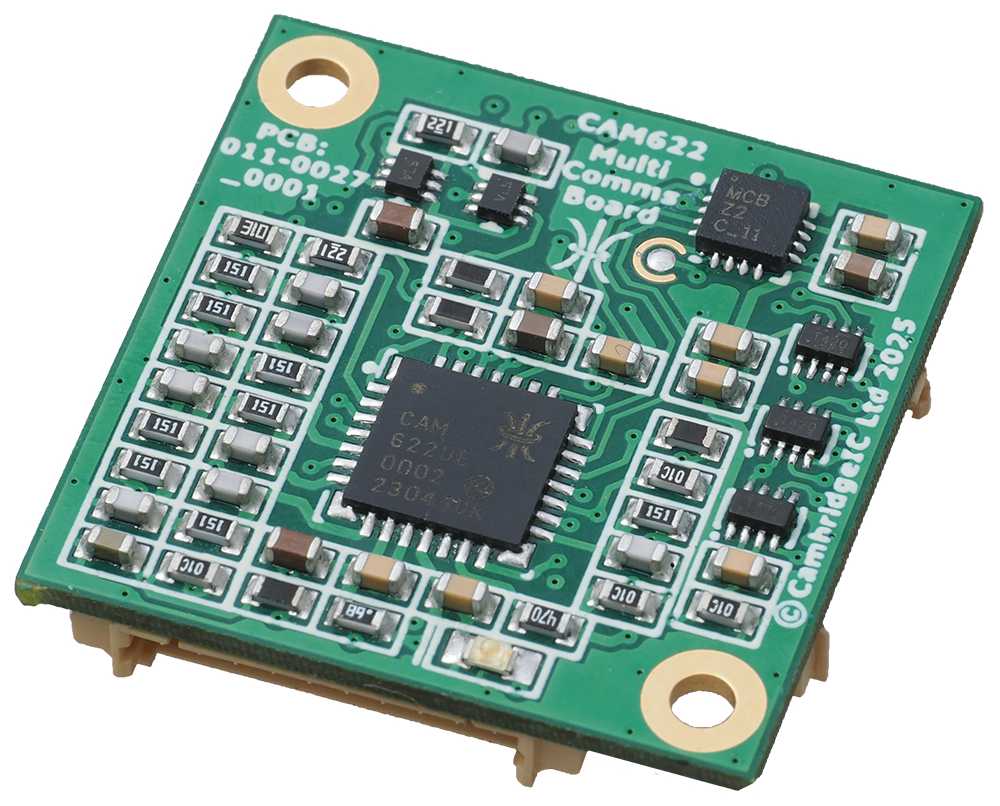
The CAM622 MultiComms Board processes a Type B Sensor. It supports multiple host interfaces including SPI, quadrature ABN, BiSS and SENT.
The CAM622 MultiComms Board includes the CAM622 IC itself, a step-down power supply for efficient operation from a 5V input, line transceivers and an iC-Haus iC-MB to support BiSS communication.
The BiSS interface uses the same 5V differential signal lines as quadrature ABN. This reduces the board space needed for connectors, and allows ABN behaviour to be configured over the ABN lines themselves using BiSS.
The CAM622 MultiComms Board connects to a Type B Rotary Sensor with the 6-way Dual PicoBlade Cable part 013-6019. Alternatively it connects to a Type B Linear Sensor with the 120mm 6-way PicoBlade-EZMate Cable part 013-6021.
The CAM622 MultiComms Board is available as part of the CAM622 MultiComms Bundle. This is recommended for getting started with evaluation and development.
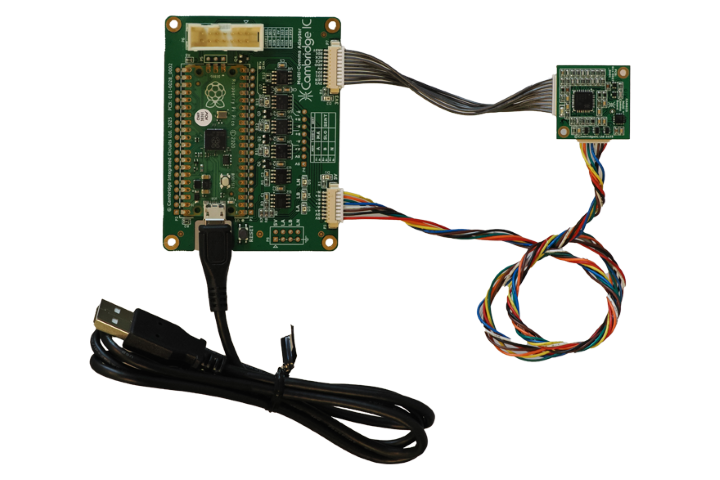
The CAM622 MultiComms Bundle is a kit of parts to help customers test and evaluate the CAM622. It connects to a customer’s choice of Type B Sensor to measure the position of an adjacent Type B Target.
At its core is the CAM622 resonant inductive encoder IC, on a CAM622 MultiComms Board. This board includes circuitry to power the 3.3V CAM622 from a 5V supply input, differential line transceivers for BiSS, ABN and SENT interfacing and an iC-Haus iC-MB supporting BiSS.
The bundle also includes a MultiComms Adapter for connecting the CAM622’s SPI, BiSS and SENT interfaces to a PC’s USB Port. This allows PC software applications including the CAM622 Configuration Tool to communicate with the CAM622. This tool configures it for standalone operation, generating encoder style quadrature ABN signals autonomously, communicating over BiSS or transmitting measurement data over SENT. Another application, CAM622 Read Position, initiates measurements over SPI, BiSS or SENT, captures them at high speed and displays and analyses them.
Cables are included for connections between the MultiComms Adapter and CAM622 MultiComms Board, and between the CAM622 MultiComms Board and a Type B Rotary Sensor or Type B Linear Sensor.
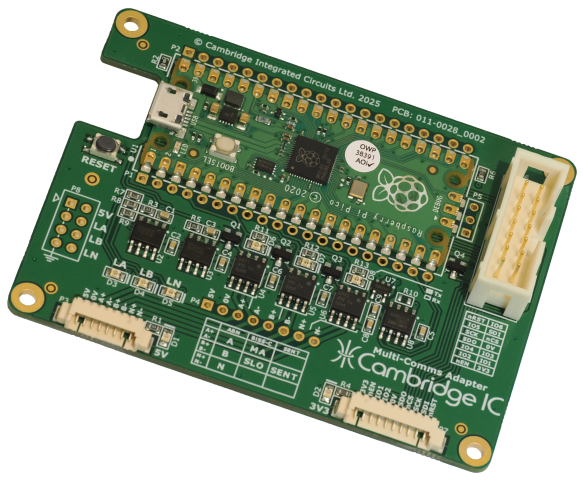
The MultiComms Adapter is for demonstration, test and development. It connects to a PC over USB, and allows it to communicate with CambridgeIC processor ICs over SPI, BiSS and SENT interfaces.
The MultiComms Adapter includes a dual core ARM M0+ Cortex processor: the RP2040 from Raspberry Pi. This performs low-level interactions with a connected CambridgeIC processor IC over a customer’s choice of interface. SPI communication is done with 3.3V level signalling. Bidirectional 5V differential line drivers support BiSS and SENT communication.
The MultiComms Adapter is available as part of a bundle together with a CAM622 MultiComms Board and matching connectors, part 013-7009. Please visit the CAM622 MultiComms Bundle page. Please Register and log in to download the CAM622 Read Position and CAM622 Configuration Tool Applications from the link below.
The MultiComms Adapter may also be used with CTU Development Boards including the CAM312 Development Board. The part number including USB cable is 013-7008. A 60mm 14-way SPI Interface Connecting Cable is also required, to make the SPI connection between the MultiComms Adapter and CTU Development Board. Please Register and log in to download CTU Streaming Demo from the link below. This application is compatible with CambridgeIC’s CTU ICs and development boards.
The MultiComms Adapter replaces both the Streaming Adapter and CTU Adapter; it supports additional interfaces and higher performance.

CambridgeIC’s Precision Rotary Targets are for use with Type 6 Precision Rotary Sensors. Samples are available to buy as assembled parts. Alternatively they may be built by the customer, enabling…
- The Target PCB shape and mounting features to be customised to the application
- Manufacture by the customer’s existing Contract Manufacturer
When building their own targets, customers have the option of buying 20mm Transponder Coil, shown below, which is a special part from CambridgeIC designed for building precise and accurate targets.
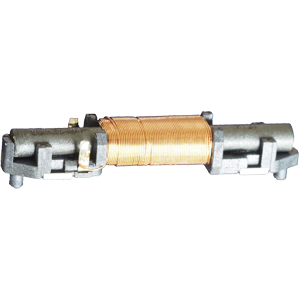
The 20mm Transponder Coil is for SMD assembly, and includes alignment pins designed to register with holes in the customer’s Target PCB.
For new designs we strongly recommend Type B Rotary Targets and their matching Type B Rotary Sensors, processed with the CAM622 processor IC. Type B Rotary Targets include PCB printed coils, eliminating the need for 20mm Transponder Coils and reducing mechanical thickness. The CAM622 offers improved performance and a larger range of electronic interfaces.
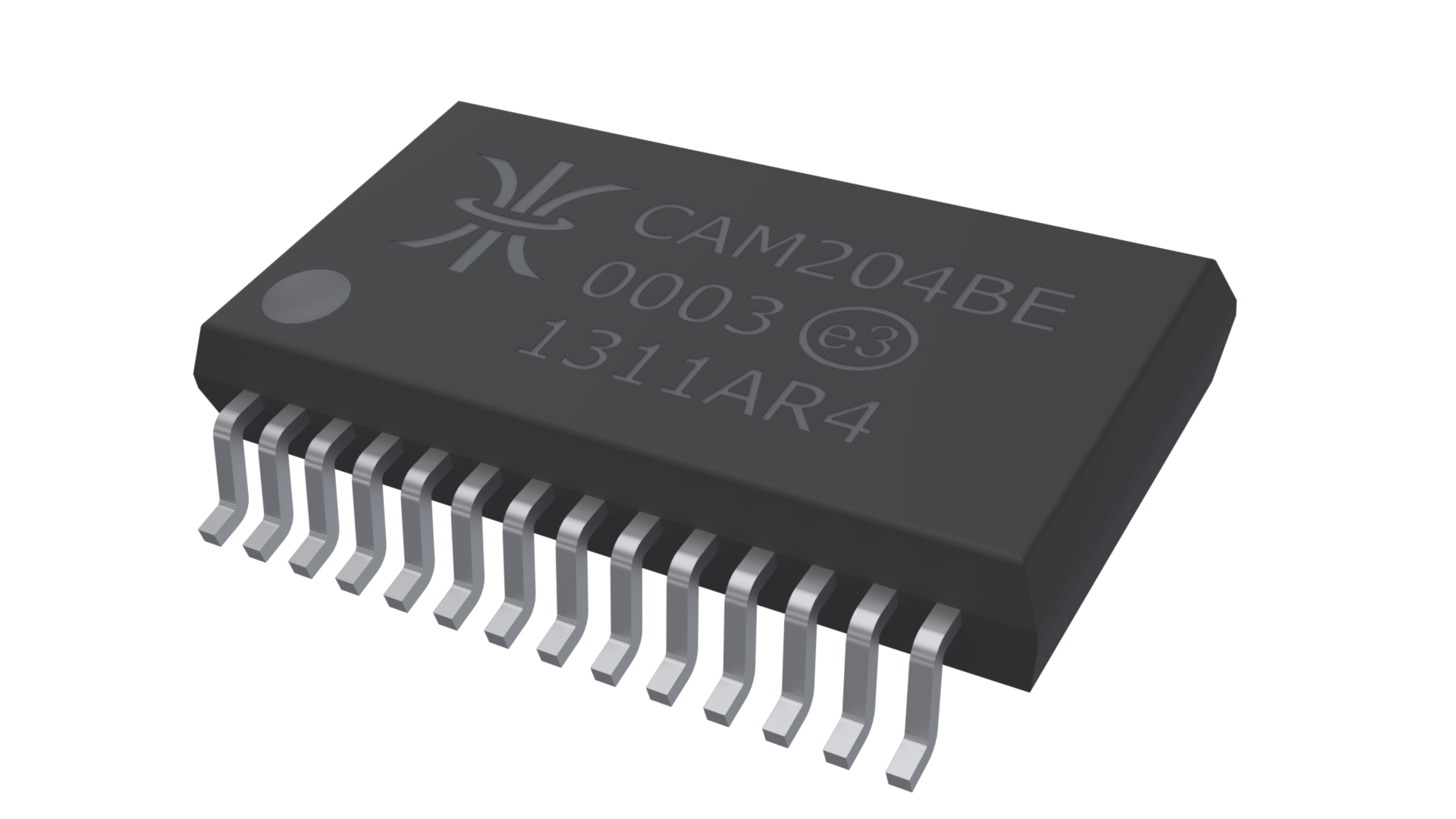
The CAM204 is a multi channel processor IC for resonant inductive position sensing. It can measure up to four sensors and reports results to a host over an SPI interface.
The CAM622 is recommended for new designs. However the CAM204 remains a cost effective processor for multi-axis sensing, including up to 4 basic sensors, which can be any combination of Basic Rotary or Basic Linear Sensors.
