
Position Calculation Basics
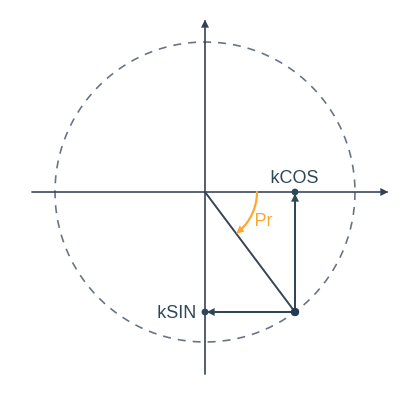
Sensor Design aims to achieve a SIN/COS variation of coupling factor with changes in position. The calculation of position (Pr in the figure below) is equivalent to the calculation of phase angle, and is performed with a 4-quadrant inverse tangent.
Fully ratiometric and immune to signal level changes
Benefits of Ratiometric Sensing
Changes in temperature, supply voltage, target Q-factor and component variations all tend to affect the SIN and COS signals equally. This means they remain in the same proportion, and the reported position Pr remains the same.
-
T
Temperature
Exceptional stability across temperature
-
V
Supply voltage
Rejects supply variations and noise
-
Q
Target Q-factor
Wide target Q-factor range
-
±
Component variations
Digital signal chain eliminates errors
Precision Sensor Processing
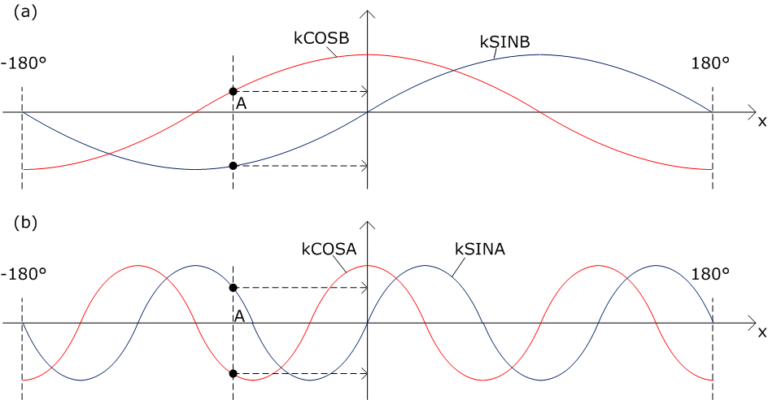
Precision Sensors include a multi-period pair of fine sensor coils (COSA and SINA) and a single period of coarse coils (COSB and SINB). The processor calculates fine and coarse position values from them using the 4-quadrant inverse tangent illustrated above.
The repeating nature of the fine coils yields high accuracy and resolution. However the fine position value repeats along the measuring range so it is only an incremental measure of position.
On the other hand, the coarse position is absolute but suffers from greater errors due to its larger SinLength value (pitch).
The processor combines fine and coarse position values to yield a single absolute position value reported to the host, drawing on coarse position for absolute information and fine position for accuracy and high resolution.
Find out more with this introduction to our technology:
Sensor Design
Proven sensor PCB designs for customers to manufacture themselves for low cost and convenience
Read more Sensor Design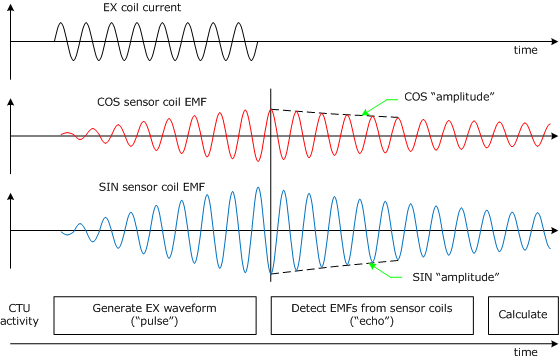
Interrogation
Pulse echo operation means accuracy without calibration, even with nearby metal
Read more InterrogationPosition Calculation
Fully ratiometric and digital signal chain for precision and immunity
Read more Position Calculation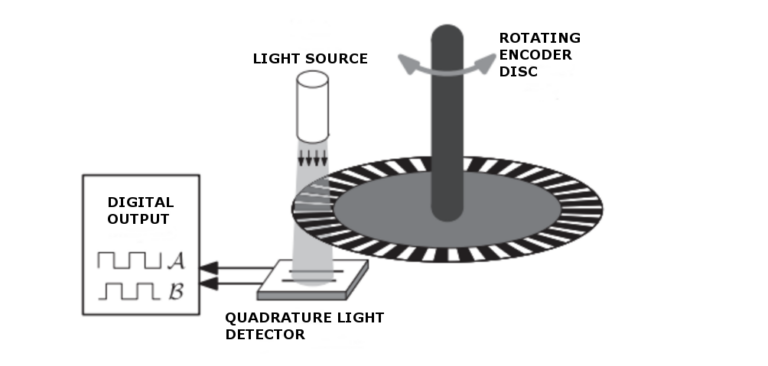
Comparison
How resonant inductive sensing measures up against traditional position sensors
Read more Comparison