
CambridgeIC’s resonant inductive position sensing technology is used in a variety of medical applications including surgical robots, syringe pumps, electronic pipettes, ultrasound scanners, resuscitation and laboratory automation.
Designers use CambridgeIC’s resonant inductive technology when they need absolute, precise, compact, easy to integrate and wear free linear or angular position feedback.
Product designers appreciate design flexibility, with designs customised to fit the tight mechanical spaces available. Large gaps and misalignment between sensors and their targets are possible, simplifying product design and assembly. By allowing large gaps between sensors and targets, each part may be individually sealed for protection against cleaning fluids.
By contrast, optical encoders require tight mechanical installation tolerances and small gaps. Working parts must be sealed inside the same enclosure against the ingress of dirt, dust and cleaning fluids, often adding seals and bearings. Magnetic encoders generally require less sealing, but they still have relatively tight installation tolerances, and these become particularly severe when absolute sensing is required in a tight space envelope. Traditional (non-resonant) inductive sensors only operate at small gaps and require tighter alignment tolerances, and tend to occupy significantly more space.

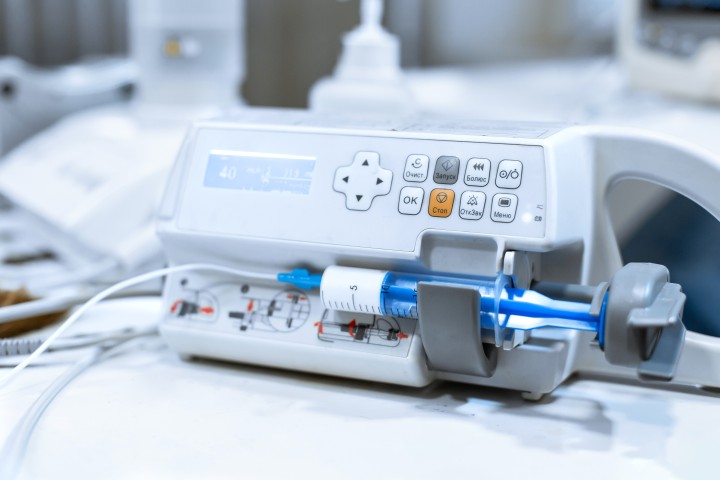


Relevant applications
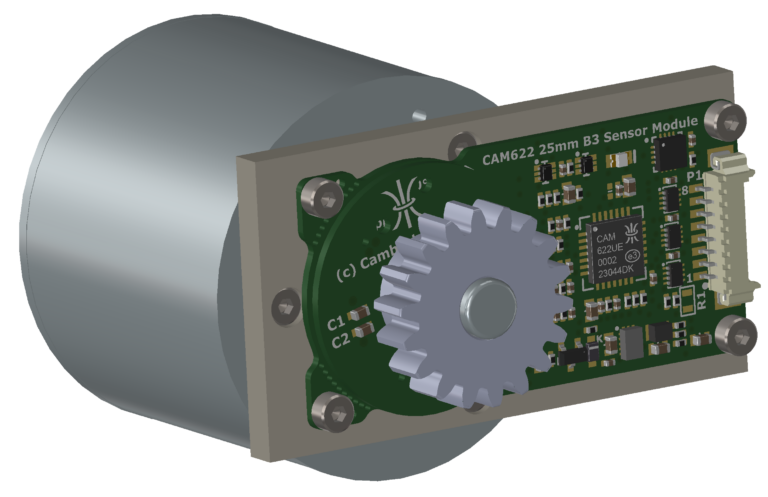
Motor Control
CambridgeIC's CAM622 processor IC is ideally suited to motor control applications requiring high quality position and velocity feedback.
Read more Motor Control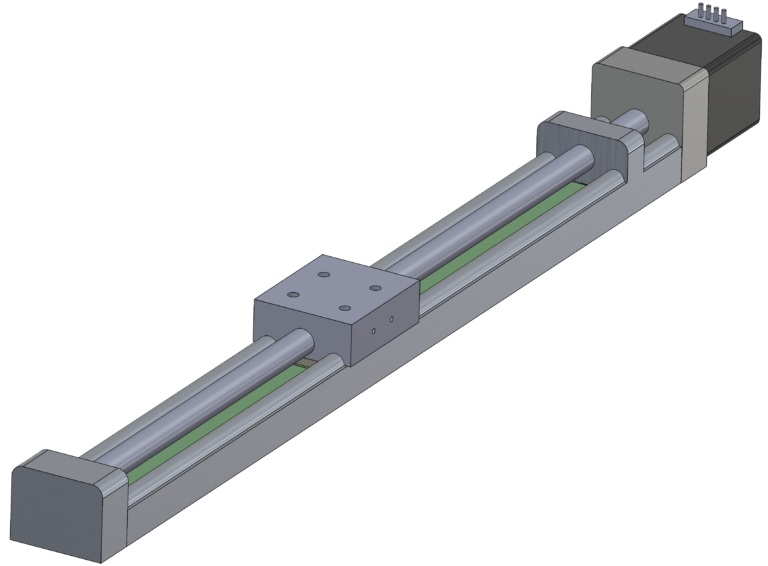
Linear Actuator
CambridgeIC's linear position transducers measure position at the point of load, replacing ballscrews with a belt to deliver a lighter, more cost effective module.
Read more Linear Actuator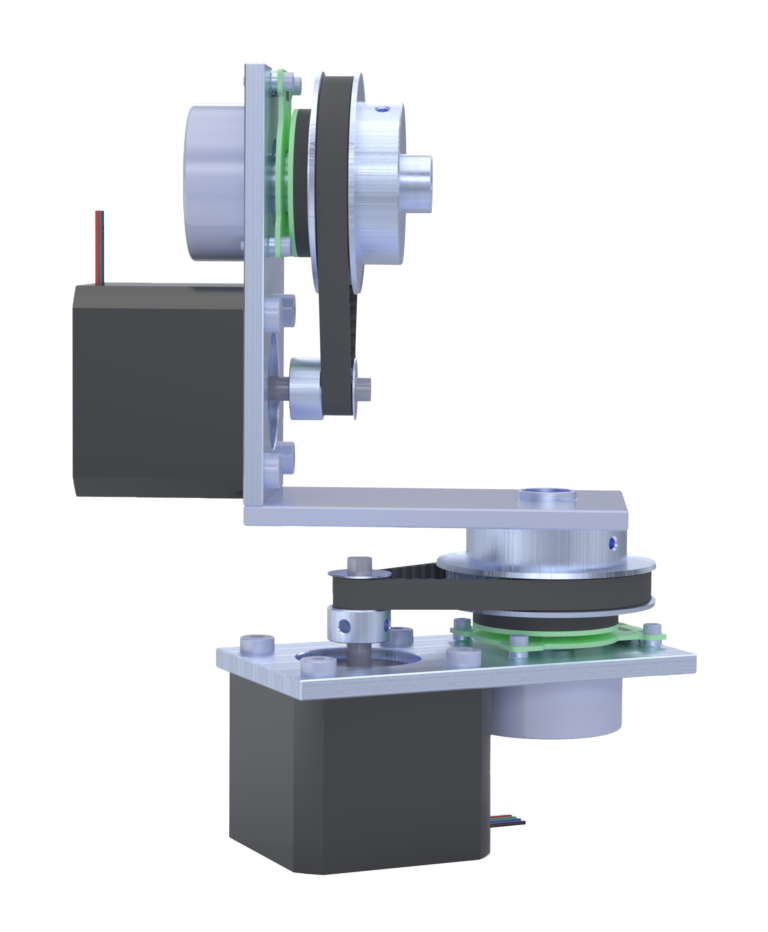
Pan and Tilt
CambridgeIC has over 14 years' experience working with pan/tilt surveillance camera designers, delivering leading performance and a cost effective, convenient feedback solution.
Read more Pan and Tilt