CAM312
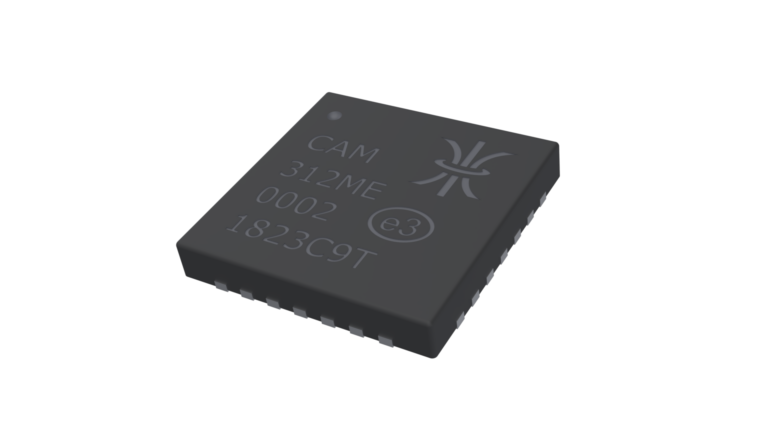
The CAM312 is a cost effective processor IC for resonant inductive position sensing. It can connect to and process up to two sensors, and reports results over an SPI interface.
Read more CAM312


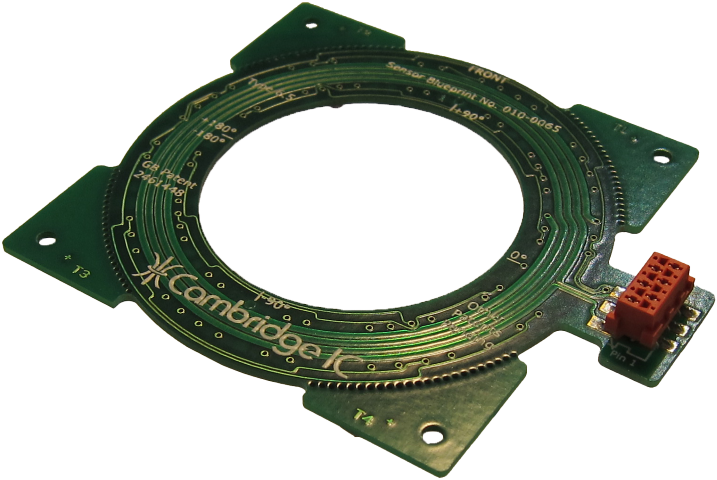
This range of rotary sensors is for precision angle measurement over a full 360° of rotation. Sensors and targets both include large central holes that allow a shaft to pass through them, and have a balanced design for immunity to misalignment.
Precision rotary sensors are type 6 sensors (find out more about how sensors are classified and what this means for CTU selection in our FAQ).
| Sensor Name | 35mm Type 6.3 Rotary Sensor | 55mm Type 6.5 Rotary Sensor | 110mm Type 6.6 Rotary Sensor | 115mm Type 6.6 Rotary Sensor | |
| Sensor and Target Diameter |
35mm outer 15mm inner |
55mm outer 35mm inner |
110mm outer 68mm inner (1) |
115mm outer 80mm inner |
|
| Performance, free space | |||||
| Gap 0.5mm No radial or angular misalignment |
Max. Linearity Error | ±0.15° | ±0.09° | ±0.08° | ±0.07° |
| Noise Free Resolution | 14 bits | 14.2 bits | 15.5 bits | 14.9 bits | |
| Gap 1.0±0.5mm Radial Misalignment up to 0.5mm Angular Misalignment up to 0.3° |
Max. Linearity Error | ±0.22° | ±0.16° | ±0.13° | ±0.11° |
| Noise Free Resolution | 13.3 bits | 13.8 bits | 15 bits | 14.6 bits | |
Note (1) Includes fixing holes inside, excludes connector
| Assembled Sensor Part No | Assembled Target Part No | Compatible Sensor Connector Assembly | Compatible Development Boards | |
|---|---|---|---|---|
| 35mm Type 6.3 | 013-0024 | 013-1019 (182.5kHz) | 013-6001 | 013-5034 (CAM312)013-5030 (CAM204)013-5032 (CAM502) |
| 55mm Type 6.5 | 013-0026 | 013-1022 (182.5kHz) | 013-6001 | |
| 110mm Type 6.6 | 013-0042 | 013-1026 (182.5kHz) | 013-6013 | |
| 115mm Type 6.6 | 013-0051 | 013-1028 (182.5kHz) | 013-6011 |
Registered users get access to the full download library, including CTU Software and sensor blueprints.
The CAM312 is a cost effective processor IC for resonant inductive position sensing. It can connect to and process up to two sensors, and reports results over an SPI interface.
Read more CAM312
CambridgeIC's Precision Rotary Targets are for use with Precision Rotary Sensors.
Read more Precision Rotary Targets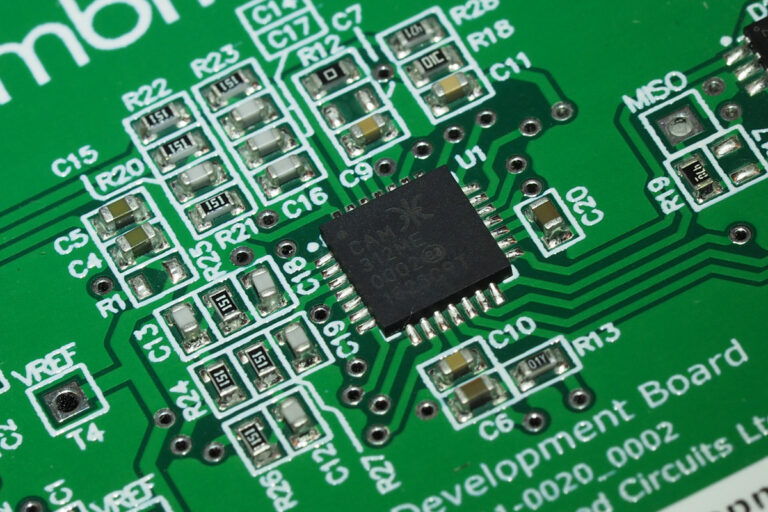
CAM312 Development Board includes a CAM312 chip and the external circuitry required for operating up to two Type 4 sensors, or one Type 2 or Type 6 sensor.
Read more CAM312 Development Board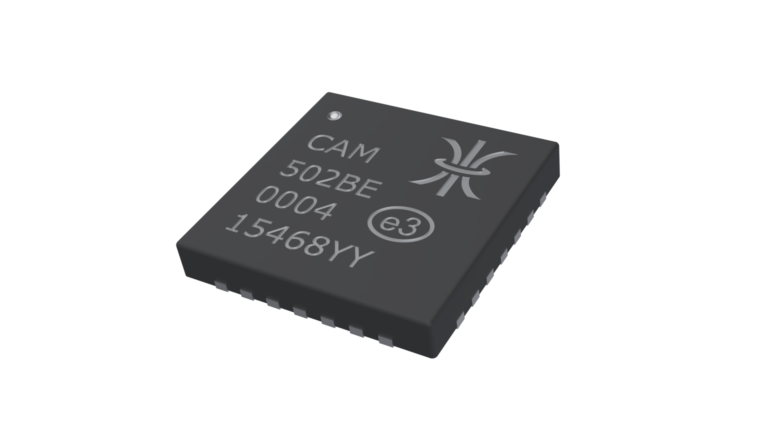
The CAM502 is a high-speed processor IC for resonant inductive position sensing. It can measure a single sensor at 5000 samples per second.
Read more CAM502Register to download software tools or get advice directly from CambridgeIC’s engineers
Log in with the email address and password you registered with.
This resource is available to registered CambridgeIC users.
Register for free access to CTU Software, CAD files and sensor blueprints.
Enter the email address you registered with and we’ll send you a link to reset your password.
If an account exists for that address, you’ll receive a password reset link shortly.
Register your account for complete access to all CambridgeIC resources.
Thank you for creating your account. You will receive an email shortly with your account confirmation. You will now be able to access all of our resources.